Governed evolution loop
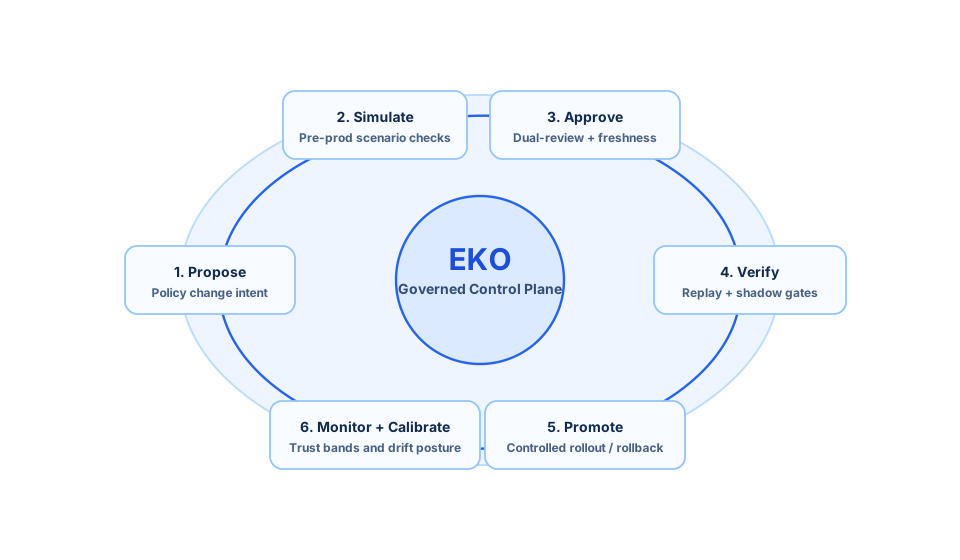
This illustration shows how EKO evolves with the organization: policy and risk changes are translated into controlled updates, verified before promotion, and measured after release.
EKO runs in the decision path of your AI stack. It ensures policy, approvals, and evidence checks happen before risky outcomes occur.
EKO receives request context such as tenant, actor, operation type, and target system.
Rules are evaluated for permissions, restricted behaviors, source constraints, and evidence requirements.
When policy requires human oversight, EKO blocks execution until authorized approvals are recorded.
Required evidence and provenance checks are applied before final decisions are accepted.
EKO allows, denies, or requires escalation before model output or external action execution.
Each governance decision is recorded for review, export, and operational reporting.
This is the operational model: EKO monitors and governs each connected layer, rather than relying on disconnected controls.
Continuous policy and trust checks across execution, change, and reporting paths.
EKO supports controlled policy and workflow evolution with approval and rollback disciplines, so governance can improve without destabilizing production systems.
This is how EKO evolves in production environments while staying controlled and auditable.
High-risk promotions can require dual approvals and fresh evidence before advancing.
Decision evidence is retained as tamper-evident bundles for audit and regulatory review.
Deterministic replay and shadow checks run before promotion to catch regressions early.
Async job handling and governance cockpit workflows keep high-volume operations manageable.
EKO adapts to policy and operational change through a governed loop that keeps human accountability in the control path.
New policy intent is modeled and tested in simulation before production behavior is touched.
Stakeholders approve high-impact changes with evidence freshness and policy intent checks.
Replay/shadow release gates and confidence signals determine go/no-go for promotion.
This illustration shows how EKO evolves with the organization: policy and risk changes are translated into controlled updates, verified before promotion, and measured after release.